Being a client-oriented company; we provide our clients with customized solutions for HDPE Tarpaulin & woven sacks. We can also package the products as per the specifications provided by clients to ensure safe and secure transit.
Severity: Warning
Message: session_start(): Failed to initialize storage module: user (path: /home/arorapolymers/public_html/system/sessions)
Filename: Session/Session.php
Line Number: 137
Backtrace:
File: /home/arorapolymers/public_html/application/controllers/Aashishtest.php
Line: 7
Function: __construct
File: /home/arorapolymers/public_html/index.php
Line: 317
Function: require_once
Being a client-oriented company; we provide our clients with customized solutions for HDPE Tarpaulin & woven sacks. We can also package the products as per the specifications provided by clients to ensure safe and secure transit.
Being a client-oriented company; we provide our clients with customized solutions for HDPE Tarpaulin & woven sacks. We can also package the products as per the specifications provided by clients to ensure safe and secure transit.
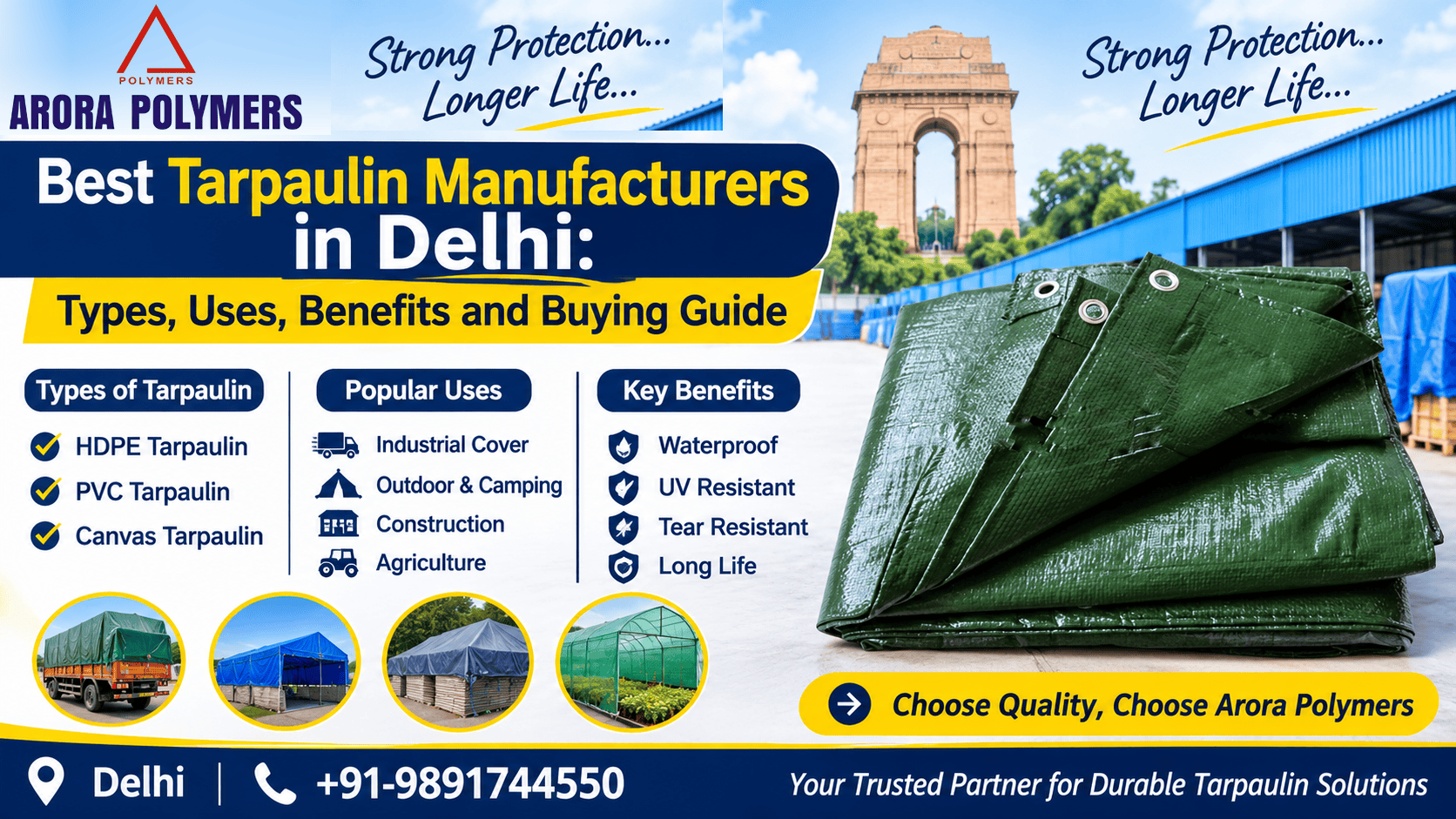
Whether you need to protect construction materials, agricultural products, industrial equipment or goods during transportation, choosing the right tarpaulin sheet is essential. A good-quality tarpaulin provides a protective barrier against rain, dust, sunlight and moisture, helping businesses keep their valuable materials safe in different working conditions.
Today, tarpaulin sheets are widely used across agriculture, construction, logistics, warehousing, packaging and manufacturing industries. Their flexibility, easy handling and availability in different specifications make them a practical choice for temporary and semi-permanent covering requirements.
However, not every tarpaulin offers the same level of protection. Material composition, GSM, weaving quality, lamination and manufacturing standards all influence the performance and durability of a sheet. This is why selecting an experienced manufacturer is just as important as choosing the right product.
If you are researching Tarpaulin Manufacturers in Delhi, understanding the available products and their applications can help you make a more informed purchasing decision. Delhi has an established industrial market for plastic sheets and protective covering materials, offering different options for commercial and industrial buyers.
Among the manufacturers serving this market, Arora Polymers offers a range of HDPE tarpaulin sheets manufacturers, laminated tarpaulins and specialised covering products for different applications.
In this detailed guide, we will explore the different types of tarpaulins, their uses, advantages, important quality factors and practical buying tips to help you select the right product for your requirements.
A tarpaulin, also commonly called a tarp or tripal, is a flexible protective sheet manufactured using materials such as High-Density Polyethylene (HDPE), Low-Density Polyethylene (LDPE), PVC-coated fabric and canvas.
It is designed to cover and protect objects from external conditions such as rain, dust, sunlight, dirt and moisture. Depending on its construction and material, a tarpaulin can provide different levels of water resistance, tensile strength, flexibility and protection against outdoor exposure.
HDPE tarpaulin manufacturers is particularly popular in commercial applications. It is generally manufactured using woven HDPE tapes and laminated with polyethylene to improve its water-resistant properties.
These sheets are available in different GSM specifications, colours and dimensions to accommodate different covering requirements.
For businesses comparing Tarpaulin Manufacturers in Delhi, it is important to understand that product quality depends on more than just sheet thickness. The quality of the raw material, weaving process, lamination and finishing also influence the final performance.
Tarpaulins are available in several materials and constructions. Each type serves a particular purpose, so buyers should select a product based on where and how it will be used.
HDPE tarpaulin sheets are among the most widely used protective covering products in the agricultural, industrial and commercial sectors.
They are generally manufactured using woven high-density polyethylene fabric with a laminated surface. This construction combines flexibility with useful strength and water resistance.
Key features of HDPE tarpaulin include:
• Lightweight and easy-to-handle construction.
• Good tensile strength when properly manufactured.
• Water-resistant laminated surface.
• Availability in different GSM specifications.
• Multiple colour and size options.
• Suitable for several indoor and outdoor covering applications.
These sheets are commonly used for covering agricultural produce, construction materials, machinery, vehicles and stored goods.
When evaluating Tarpaulin Manufacturers in Delhi, buyers often consider HDPE sheets because they provide a practical combination of flexibility, weight and protective performance.
HDPE laminated tarpaulin consists of woven polyethylene fabric with a protective polymer coating or lamination.
The laminated surface helps reduce water penetration and protects the underlying woven material during regular use.
This product is suitable for businesses that require flexible protective sheets for storage, transportation and outdoor covering.
Common applications include:
• Covering industrial raw materials.
• Protecting agricultural produce.
• Covering goods in warehouses.
• Construction site protection.
• Temporary outdoor shelters.
• Covering machinery and equipment.
When purchasing laminated sheets, pay attention to the uniformity of the coating, fabric strength and quality of edge finishing.
Waterproof tarpaulin sheets are designed to protect covered materials from rainfall and moisture.
They are available in different materials and constructions, including laminated HDPE varieties. Their performance depends on the quality of the sheet, seams, joints and installation.
Waterproof plastic sheets are commonly used in agriculture, construction, transportation and industrial storage.
Before selecting a product, check whether its waterproofing performance is appropriate for the expected weather conditions and duration of use.
LDPE, or Low-Density Polyethylene, is known for its flexibility and moisture-resistant characteristics.
LDPE-based sheets can be useful for selected protective covering, packaging and industrial applications.
Their suitability depends on the thickness, construction and intended working environment.
Buyers should compare LDPE products with HDPE alternatives based on the specific protection they require rather than assuming that one material is suitable for every application.
PVC tarpaulin is generally manufactured using a textile base fabric coated with polyvinyl chloride.
It is commonly used where buyers need a strong, flexible and waterproof coated fabric.
Some important characteristics include:
• Durable coated surface.
• Good water resistance.
• Flexible construction.
• Suitability for selected heavy-duty applications.
• Availability in different colours and specifications.
PVC tarpaulins are often used for truck covers, industrial enclosures, tents and equipment protection.
Apart from standard HDPE sheets, some manufacturers offer specialised product categories designed for different market requirements.
Arora Polymers lists products such as Superseal, Bulltarp, Tuffseal, Trustseal, Starseal and Superpoly tarpaulin.
These product names represent different offerings within the company's range. Customers should compare their actual specifications, GSM, material construction and intended applications before making a selection.
One of the biggest advantages of tarpaulin sheets is their versatility. They are used across several industries because they offer a convenient way to protect materials without requiring permanent structures.
Agriculture is one of the major application areas for protective plastic sheets.
Farmers and agricultural businesses use tarpaulins to cover harvested crops, protect farm equipment and manage temporary storage requirements.
Common uses include:
• Covering grains and agricultural produce.
• Protecting fertilisers and farm supplies.
• Covering tractors and agricultural machinery.
• Creating temporary storage areas.
• Protecting stored materials from rain and dust.
For agricultural applications, buyers should consider the sheet's water resistance, UV protection and suitability for prolonged outdoor exposure.
Construction sites frequently store materials such as cement bags, sand, bricks, steel components and tools in open areas.
Rain, sunlight and dust can affect these materials, making protective covering an important requirement.
Heavy-duty tarpaulin sheets can be used to cover construction supplies, machinery and unfinished work areas.
Businesses comparing Tarpaulin Manufacturers in Delhi for construction projects should pay attention to GSM, tear resistance, dimensions and the quality of the sheet's edges.
The right specification will depend on the type of material being covered and the expected exposure conditions.
Transportation companies need to protect goods during loading, unloading and transit.
Truck covers and vehicle tarpaulins provide an additional protective layer over transported materials, helping reduce exposure to rain, dust and sunlight.
Common applications include:
• Truck and trailer covers.
• Goods transportation.
• Industrial cargo protection.
• Warehouse-to-warehouse movement.
• Covering bulk materials.
For these applications, buyers should consider proper sheet dimensions, reinforced edges, eyelets and secure fastening arrangements.
Warehouses and manufacturing units frequently store raw materials, finished goods, equipment and packaging supplies.
Protective sheets can help reduce exposure to dust, moisture and other environmental conditions.
HDPE tarpaulin manufacturers is a practical option for several temporary and semi-permanent storage requirements.
Businesses should select a suitable material based on the weight, sensitivity and storage conditions of the products being covered.
Tarpaulin sheets are also used to cover palletised goods, bulk materials and packaged products.
They can provide an additional protective layer during storage, handling and transportation.
Customised dimensions may help businesses cover different pallet sizes and packaging configurations more efficiently.
Tarpaulins can be used as temporary roofing materials at construction sites, agricultural facilities, outdoor events and relief camps.
They are relatively easy to transport, fold and install, making them useful when permanent roofing is unavailable.
However, installation quality is important. Proper anchoring, water drainage and wind protection should always be considered.
A suitable tarpaulin can offer several practical advantages for businesses and individual buyers.
Water-resistant tarpaulins help protect materials from rainfall and moisture exposure.
This is especially useful when goods are stored outdoors or transported over long distances.
Dust accumulation can affect stored products, industrial equipment and packaging materials.
Covering them with a suitable protective sheet helps maintain cleaner storage conditions.
Many HDPE tarpaulins are relatively lightweight compared with rigid covering materials.
They can be folded, carried, installed and stored conveniently, making them suitable for applications where coverings need to be moved regularly.
Tarpaulins are available in different sizes, materials and GSM specifications.
This flexibility allows businesses to use them for agriculture, construction, transportation, warehousing and several other purposes.
Tarpaulins can provide an economical alternative to certain permanent covering arrangements, particularly for temporary and selected semi-permanent applications.
Their overall value depends on product quality, maintenance, installation and usage conditions.
Different industrial applications require different dimensions and colours.
Manufacturers offering multiple product specifications make it easier for buyers to find sheets that match their requirements.
Depending on the material and working conditions, a tarpaulin can be folded and reused.
Cleaning the sheet, allowing it to dry completely and storing it properly can help maintain its condition.
Outdoor-grade tarpaulins can help protect covered materials from sunlight, rain and dust.
However, not every sheet is designed for continuous outdoor exposure. Buyers should check the product's UV stabilisation and weather-resistance specifications.
Selecting a manufacturer is an important part of purchasing a tarpaulin. A good supplier should understand different applications and provide suitable product specifications.
If you are comparing Tarpaulin Manufacturers in Delhi, consider the following factors before placing an order.
Start by reviewing the manufacturer's background, product portfolio and manufacturing facilities.
An established manufacturing business may have greater familiarity with different material requirements and production processes.
Check whether the company has a clear product range and provides information about its manufacturing capabilities.
GSM stands for grams per square metre. It represents the weight of a material per unit area.
GSM is an important specification when comparing tarpaulin sheets, but it should not be treated as the only measure of quality.
For general guidance:
• 80–100 GSM: May suit selected light-duty covering applications.
• 110–150 GSM: Can be considered for general-purpose requirements.
• 170–200 GSM: May suit more demanding covering applications.
• 250–450 GSM: Can be considered for selected heavy-duty requirements.
These are indicative selection ranges, not universal performance classifications. Two tarpaulins with the same GSM can have different strengths because of differences in fabric construction, material quality and lamination.
Always confirm the manufacturer's actual specifications before ordering.
The material used in manufacturing directly affects a sheet's performance.
Check whether the product is made from HDPE, LDPE, PVC-coated fabric or another suitable material.
You should also enquire about:
• Fabric construction.
• Weaving quality.
• Lamination consistency.
• Tensile strength.
• Tear resistance.
• Water resistance.
• Edge finishing.
A clear understanding of these specifications helps buyers compare different products more accurately.
If the sheet will be used outdoors, waterproofing and UV protection are important considerations.
Ask the manufacturer whether the material is UV stabilised and whether its water resistance has been tested.
Also consider how long the sheet will remain exposed to direct sunlight and rainfall.
Different businesses have different requirements.
For example, a transport company may need vehicle-sized covers, while an agricultural business may need large sheets for crop protection.
Ask about available dimensions, colours, GSM specifications, reinforced edges, eyelets and packaging options.
When evaluating Tarpaulin Manufacturers in Delhi, check whether the manufacturer can accommodate your required product specifications.
Price is important, particularly for bulk purchases, but choosing the cheapest product may not always be economical.
A sheet that does not provide adequate protection may need frequent replacement.
Compare quotations based on:
• Material and GSM.
• Sheet dimensions.
• Fabric and lamination quality.
• Order quantity.
• Finishing requirements.
• Packaging.
• Transportation charges.
• Applicable taxes.
Always compare products with similar specifications before deciding.
Wholesalers, distributors, contractors and industrial buyers may require large quantities.
Before placing an order, enquire about minimum order quantity, manufacturing lead time, available stock, packaging and dispatch arrangements.
This is especially important for repeat purchases and time-sensitive projects.
A manufacturer should be able to explain its product specifications and help customers identify suitable options.
Clear communication regarding price, product quality, order quantity and delivery timelines makes the purchasing process more reliable.
When comparing Tarpaulin Manufacturers in Delhi, it is important to consider the manufacturer's experience, product selection and ability to understand different customer requirements.
Arora Polymers is a manufacturer and supplier of HDPE tarpaulin and woven sack products, established in 2004. The company operates from Narela Industrial Area, Delhi, and has in-house manufacturing facilities for its product categories.
Its range includes different types of tarpaulin products for commercial, industrial and agricultural applications.
Arora Polymers offers several products, including:
• HDPE tarpaulin sheets.
• Laminated tarpaulin.
• Superseal tarpaulin.
• Bulltarp tarpaulin.
• Tuffseal tarpaulin.
• Trustseal tarpaulin.
• Starseal tarpaulin.
• Superpoly tarpaulin.
• Plastic tarpaulin.
• Waterproof tarpaulin.
• Tarpaulin covers.
This product variety gives customers different options to explore according to their covering requirements.
The company's published product range includes HDPE tarpaulin sheets from 80 GSM to 450 GSM in multiple colours.
This range allows buyers to enquire about different sheet weights and specifications for light-duty, general-purpose and selected heavy-duty applications.
Customers should discuss their actual usage requirements with the company to identify the appropriate product.
Arora Polymers serves several industry segments, including:
• Transportation and logistics.
• Agriculture.
• Packaging.
• Pallet covering and exports.
• Construction.
• Roofing.
• Livestock-related applications.
• Relief camps and temporary shelters.
Its product range is relevant to businesses that need protective covering materials for storage, handling and transportation.
Different customers may require specific dimensions, colours, product specifications and packaging arrangements.
Arora Polymers highlights customised solutions for HDPE tarpaulin and woven sacks, including packaging according to customer requirements to support safe transit.
This is useful for businesses that purchase tarpaulins in bulk or have specific packaging needs.
With a business history dating back to 2004, Arora Polymers has developed its presence in the HDPE tarpaulin and woven sack segment.
For customers exploring Tarpaulin Manufacturers in Delhi, the company is worth considering when comparing product specifications, manufacturing options and available solutions.
To learn more about its products, visit the official website:
Website: https://arorapolymers.net/
Address: B-2544, DSIIDC, Narela Industrial Area, Delhi – 110040.
Contact: +91-9811084449.
Customers can contact the company to confirm current product availability, specifications, quotations, minimum order quantities and delivery timelines.
Even when purchasing from an established manufacturer, buyers should pay attention to product specifications and intended applications.
Here are some common mistakes worth avoiding.
Choosing only by price: A low-priced sheet may not provide the required level of protection. Compare material quality and specifications before making a decision.
Ignoring the intended application: A sheet designed for temporary indoor covering may not be suitable for prolonged outdoor use.
Overlooking GSM: GSM should be considered alongside fabric construction, lamination and material quality.
Not measuring the covering area: Incorrect dimensions can create gaps or insufficient overlap. Measure the area carefully before ordering.
Ignoring edge finishing: Weak edges and poorly installed eyelets can affect the sheet's performance during installation and regular use.
Assuming every waterproof sheet performs identically: Different materials, coatings and manufacturing processes provide different levels of water resistance.
Not confirming bulk order specifications: Always get the agreed GSM, dimensions, quantity, price and delivery details confirmed before placing a large order.
Taking these precautions can help reduce purchasing errors and improve the overall value of your investment.
Proper maintenance can help keep tarpaulin sheets in better condition and reduce avoidable damage.
Follow these practices:
1. Clean the sheet regularly to remove dust, mud and accumulated debris.
2. Allow it to dry completely before folding and storing.
3. Avoid dragging the material over sharp or rough surfaces.
4. Use suitable ropes and fasteners during installation.
5. Avoid applying excessive tension around eyelets and corners.
6. Store unused sheets in a clean and dry location.
7. Inspect seams, edges and eyelets periodically.
8. Repair small tears promptly using a compatible repair method.
For outdoor installations, ensure the sheet is properly secured and that rainwater does not collect in sagging areas.
Good handling and storage practices can help maintain the product's condition over time.
Tarpaulin sheets are a practical protective solution for businesses involved in agriculture, construction, transportation, packaging, warehousing and manufacturing. From covering harvested crops to protecting industrial machinery and transported goods, the right sheet can make everyday storage and handling operations easier.
However, selecting a suitable product requires more than simply comparing prices. Material composition, GSM, fabric strength, lamination, dimensions and weather resistance should all be considered before making a purchase.
When researching Tarpaulin Manufacturers in Delhi, focus on manufacturers that provide clear product specifications, a suitable range of materials, customised options and reliable communication.
Arora Polymers, established in 2004, offers a range of HDPE tarpaulin manufacturers, laminated tarpaulins and specialised covering products from its manufacturing facility in Narela, Delhi.
Whether you are a wholesaler, distributor, contractor, farmer or industrial buyer, understanding your requirements will help you select a tarpaulin that offers the right balance of protection, usability and value.
Looking for suitable tarpaulin sheets for your business? Visit Arora Polymers to explore its product range and enquire about available specifications for your requirements.
1. Which are the best Tarpaulin Manufacturers in Delhi?
The best tarpaulin manufacturer depends on product quality, material specifications, GSM options, manufacturing experience and bulk supply capabilities. Arora Polymers is a manufacturer worth considering, offering HDPE tarpaulin sheets, laminated tarpaulins, waterproof sheets and specialised tarpaulin products for different industrial and commercial applications.
2. What is the best material for manufacturing tarpaulin sheets?
HDPE (High-Density Polyethylene) is one of the most commonly used materials for manufacturing plastic tarpaulin sheets. It offers a combination of flexibility, strength and lightweight construction. HDPE fabric is generally laminated with LDPE to improve water resistance, making it suitable for agricultural, industrial, construction and transportation applications.
3. What is GSM in tarpaulin sheets, and which GSM is best?
GSM stands for Grams per Square Metre and indicates the weight of a tarpaulin sheet per unit area. The right GSM depends on the intended application, weather exposure and required durability. Lower GSM sheets may suit light-duty covering, while higher GSM options are often considered for more demanding applications. Material quality, weaving and lamination should also be evaluated.
4. Are HDPE tarpaulin sheets waterproof and suitable for outdoor use?
Yes, HDPE tarpaulin sheets are commonly laminated with polyethylene to improve water resistance and protect covered materials from rain and moisture. Many varieties are suitable for outdoor applications, including agricultural storage, construction sites and transportation. For prolonged outdoor use, check the product's UV stabilisation and weather-resistance specifications.
5. What are the major uses of HDPE tarpaulin sheets?
HDPE tarpaulin sheets are widely used in agriculture, construction, transportation, warehousing, packaging and manufacturing. They help protect harvested crops, industrial machinery, construction materials, vehicles and stored goods from rain, dust and sunlight. Their lightweight and flexible construction makes them convenient for several covering applications.
6. How do I choose a reliable tarpaulin manufacturer in Delhi?
To choose a reliable manufacturer, check its manufacturing experience, product range, raw material quality, GSM specifications, lamination standards and customisation options. Also compare quotations, bulk order capabilities and delivery arrangements. Request product specifications or samples where possible to evaluate quality before placing a large order.
7. What is the difference between HDPE and PVC tarpaulin?
HDPE tarpaulin is generally manufactured using woven polyethylene tapes with a protective laminated coating. PVC tarpaulin typically consists of a textile base fabric coated with polyvinyl chloride. HDPE sheets are popular for lightweight and flexible covering applications, while PVC-coated tarpaulins are commonly used for certain heavy-duty applications, including vehicle covers and industrial enclosures.
8. Can I purchase customised HDPE tarpaulin sheets in different sizes and colours?
Yes, many manufacturers offer HDPE tarpaulin sheets in different sizes, colours and GSM specifications. Customisation may also include reinforced edges, eyelets and specific packaging arrangements, depending on manufacturing capabilities. Arora Polymers offers different HDPE tarpaulin product options, and customers can contact the company to discuss their specific requirements.
9. Why should businesses buy tarpaulin sheets directly from manufacturers?
Purchasing directly from manufacturers can make it easier to understand product specifications, discuss customised requirements and enquire about bulk orders. Buyers can communicate more directly about GSM, dimensions, material quality, packaging and delivery timelines. It also helps businesses compare products based on their actual manufacturing specifications rather than price alone.
10. Does Arora Polymers supply different types of tarpaulin sheets in Delhi?
Yes, Arora Polymers offers a range of tarpaulin products, including HDPE tarpaulin sheets, laminated tarpaulins, waterproof tarpaulin sheets, Superseal, Bulltarp, Tuffseal, Trustseal and Starseal. The company also offers different GSM specifications and colour options. Visit https://arorapolymers.net/ or contact the company directly to enquire about current product availability and pricing.